
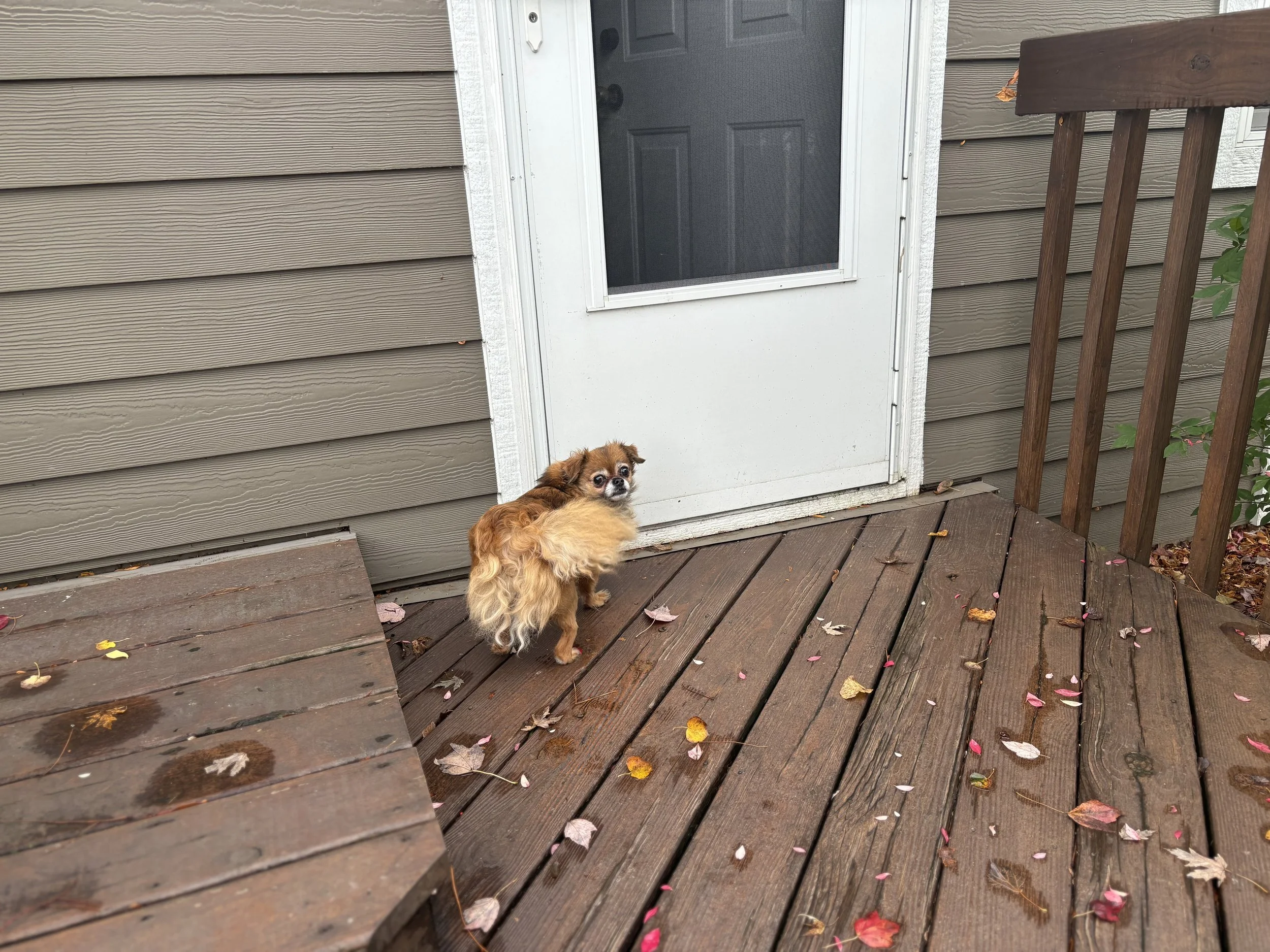
Moe, who quite at home at Daddy’s house, waits for me to let him inside.
OK, I’m making the leap you remember this classic line from one of the best films ever made.
“My mama always said life was like a box of chocolates. You never know what you’re gonna get.”
I refer, of course, to the classic film Forrest Gump (1994).
I was reminded of the film when I started thinking abot what rescuing pups is like in our world.
Yes, I brought up a film as a comparison, but we can all identify with the uncertainty of life itself. Let’s explore the similarities of opening a box of chocolates to…
… adopting a shelter dog.
And yes, I realize I just posted about adoption as opposed to buying from a breeder, but I’m passionate about it.
If you’re not, that’s O.K.
If you are on board with adoption, I pray the information I’m providing will help you through the process.
Bringing home a new dog is a big moment, but a rescue pup can need extra help, patience, and a little extra love while settling in.
There are rescues that allow you to return a pup that doesn’t “work out.”
I wouldn’t have considered taking Moe back.
I’m also older and happen to be home all day.
We’re together without interruption all day and night. We have been for 7 years now.
People take pups back for various reasons. I commend them for being realistic. Dogs shouldn’t be neglected.
If you can’t handle the dog and/or the needs he or she brings you should take the pup back.
Give someone who can provide the dog’s needs.
Picking the best shelter dog for your family starts with that first spark, but looks aren’t everything.
Again, just like real life. ;)
You want to help the process by chatting with the staff about your daily routines, your home, and what you imagine life will look like with your new dog.
Visit a few times and spend time together—get to know your potential pup in play areas, not just through the kennel bars.
Adopting from a shelter is a wonderful way to give a dog a second chance.
Remember now, your new friend may not have had a smooth start.
Take things slow and build trust. My Moe was taken from a hoard. He came to me with severe separation anxiety.
Read 5 Reasons to Adopt a Rescue Dog, Especially a Small One.
The toughest part is things don’t always work out.
Setting yourself up from the start can stack the odds in your favor.
Here are six things to keep in mind as you welcome a rescue dog:
1. Health Care Costs Can Pop Up
Shelters usually check each dog’s health and handle urgent needs, but some extra costs may find their way to you. Most dogs will have their core vaccines, but double-check if they need more shots after you bring them home.
Helpful Tip:
Ask about heartworm testing—dogs older than six months should’ve been tested, and prevention should’ve started. Treating heartworm is not easy on your wallet. It’s no frolic in the dog park for your dog if you don’t prevent it and he or she gets it.
Most shelters spay or neuter dogs before adoption, except for puppies. If you’re adopting a puppy, the shelter may ask you to handle the surgery later or provide some help with the cost. Microchipping is common, but don’t forget to update the chip with your info. as soon as you get home.
2. Your Dog’s Personality Might Shift
Shelters do their best to get to know their dogs, but life in a kennel is nothing like lounging on your couch. Once home, your dog’s real personality will start to shine. This can take anywhere from a few weeks to half a year. Some dogs settle in fast, while others need more time to get comfortable, especially if life’s thrown them a few curveballs.
Helpful Tip:
Ask the staff for details. Has the pup met kids, men, women, or other animals? How do they act around food and toys? Are they okay with loud noises? Can they handle basic grooming?
Find out as much as you can. Just remember—some traits may change in a new home.
To keep things easy at first, feed your new pup in a calm spot where nobody can sneak up on them.
Dogs who have missed meals in the past may worry about food, so let them eat in peace. With time and trust, you can relax.
3. Life Skills May Be a Work in Progress
A rescue dog might know some “people rules”, or none at all.
Play it safe and treat them like a puppy, no matter their age.
House training has top priority.
Dogs used to outdoor or kennel life might not know the drill yet for potty breaks.
Take them out often, praise every trip to the yard, and watch for signs they need to go.
Creating a schedule is a very good move.
Don’t assume an older dog is past the chewing stage either.
Puppy-proof your space, and have a crate or safe zone ready for when you can’t watch them.
Be ready to teach or reteach basics like house training, crate time, leash walks, waiting at doors, being handled for grooming, and simple cues like “sit” and “come.”
There will be blog posts in your future if you visit us, that will give you tips for basic training and creating a safe home for your pup.
4. Mystery Backgrounds Come Standard
Most shelter dogs come with missing pieces in their history. Their previous lives are often a blank slate.
You may never know about their early diet, social experiences, or even their parents’ health. This can affect everything from temperament to future medical issues.
Some pups may be shy from bad experiences, or simply by nature. Sometimes, issues like fear or aggression show up later, especially during their adolescence. See why we love dogs? We can relate to them in many ways. ;)
Genetics can be a wild card. Your dog might have inherited health problems, or they may be perfectly healthy. Good breeders keep records, but with a rescue, you’re working with what you see.
Helpful Tip:
Keep an open mind and stay flexible.
5. Every Shelter Plays by Its Own Rules
The adoption process can look different everywhere. Expect paperwork, meetings, and sometimes a home visit—not because they don’t trust you, but because they want the best fit.
Before Moe found me I tried to adopt a pup, but I refused the home visit.
The shelter promptly told me that made me ineligible to adopt from them.
Why, you might wonder?
I went into detail on my application that I had two Min Pins, (Charlie and Tuco) that I bought from a puppy mill.
My husband and I were unaware of the hubbub around those at that time.
Our little guys were brothers.
They both ended up with insulin dependent diabetes.
I injected them twice a day while they were with us.
Call me sensitive, but I was sure that, that fact would’ve given the shelter the message I was a person who put a dog’s well-being front and center.
They didn’t see it that way.
I moved on and found Chili, my first rescue, then my Moe. :)
Some shelters have rules about yards or past dog experience.
Be polite if you need to talk through any requirements.
If you have existing pets, set up an introduction meeting on neutral ground.
This helps everyone start off on the right paw.
6. Patience Pays Off
Some dogs act like they’ve lived with you forever.
Most need time to settle.
Go slow and keep things peaceful at first.
Give your new dog a quiet spot to retreat if things get overwhelming—crates or separate rooms work well.
Hold off on visitors and big meet-and-greets until your dog feels safe.
Feed meals in a calm space.
Practice leash walks in your yard before exploring the neighborhood.
Respect their reluctance to walk on a leash. Moe will not go for walks. I have a theory that he was cooped up before he was rescued.
Simply never got used to it.
It’s OK.
You should see him tear around the backyard like a NASCAR driver. ;)
Keep outings short and simple for the first few days.
Get your new pup to the vet for a check-up and to continue any needed preventive care.
Bringing a rescue dog home is equal parts heart and patience.
Give them consistency and understanding, and you’ll be on your way to building a wonderful bond.
The love they give us is overpayment. :)